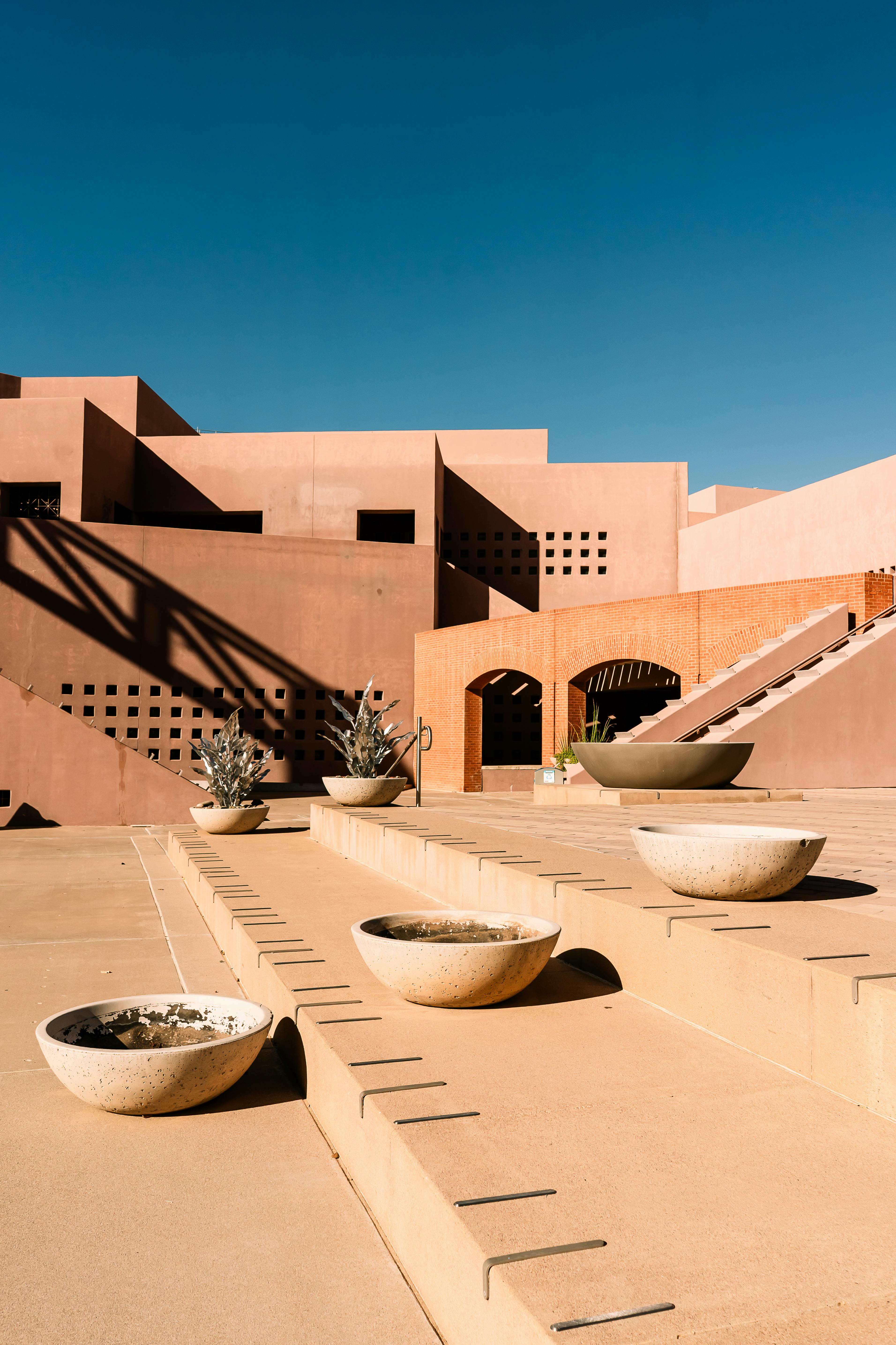
Thermal Mass and Tonal Depth: Photography in the High Desert
An exploration of structural permanence and shifting light within arid landscapes. This visual essay documents how brutalist forms and raw earthen walls absorb the intense heat of the high desert, translating thermal mass into deep, high-contrast tonal gradients on film. A study in architectural isolation, capturing the raw dialogue between monolithic geometry and the uncompromising noon sun.
// Field Notes
The challenge in the high desert is not a lack of light, but an excess of it. For this series, exposure decisions were built around retaining texture in the brightest plaster edges while allowing recessed courtyards to fall into deep, legible shadow. The result is a restrained study of heat, density, and material memory.
Low Sun Strategy: Scheduling primary elevations at first and last light to reveal stratified wall texture without flattening the earthen surface.
Thermal Color Shift: Preserving the subtle movement from ochre to clay as the walls cool after sunset.
Negative Space: Using open sky and bare ground as compositional quiet so the building reads as a single grounded object.
The final edit treats the building less as an object and more as a climate instrument—absorbing, filtering, and slowly returning the desert’s light.